

 LinkedIn
A site can pass every crawl check and still never appear in an AI answer. Another can answer the buyer’s exact question but never get fetched. Which problem do you fix first? Smart people disagree because both failures are real: the technical camp says an engine cannot cite a page it cannot read; the content camp says it will not cite a readable page that answers nothing.
I used to start with technical every time. I was wrong about how often that is the right call. My verdict, borrowed from Quality Score: technical is the gate, content is the score, and most small-business sites already clear the gate. First, each side deserves its best argument.
The technical case: a page has to get into the room
The strongest technical argument is simple and correct on mechanism. A citation is a fetch before it is a vote. If an engine never retrieves your page, your prose never gets judged. Search indexes, live-answer crawlers, rendering, and snippet rules can all determine whether a page enters the candidate pool. One checklist puts the pickup lag at days for Perplexity, one to three weeks for ChatGPT, and four to eight weeks for AI Overviews. Fix a closed gate first. Content cannot outrun a page the engine cannot read.
Most blocking is silent, which is why this camp wins so many audits. In one August 2026 test that fetched 314 sites as 38 different crawlers, 43% refused at least one crawler but only 23 had a written robots.txt rule; 112 refused silently at the server. Only 33 blocked live-answer fetch crawlers, and 31 of those had nothing written down. The usual suspects are familiar: a Cloudflare bot preset or WAF that drops crawlers before robots.txt is read, JavaScript that leaves a crawler staring at an empty shell, a nosnippet tag or max-snippet limit left over from an old SEO ticket, or key facts trapped in images and sliders. For Google’s AI Overviews, eligibility starts with indexed, snippet-eligible pages. If your answers live where the fetcher cannot read, you do not have a content problem yet.
Who should put the technical fix first
A new domain with thin index coverage. A site rebuilt on a client-side framework. A business that turned on aggressive bot blocking during a spam scare. If that is you, commissioning answer pages is premature. Check the relevant crawler rules, confirm that a money page renders without scripts, and check whether that page appears in the search index you are relying on. If the page never gets into the room, work through the technical fix guide before you buy another article.
The content case: getting fetched is not getting cited
The content camp starts where the technical camp stops. Retrieval is not citation. One home-services analysis found that roughly 110 of 3,554 retrieved pages survived into the answer, about 3.1%. Brands named during query fan-out were cited 68.9% of the time, versus 2.1% for pages that were only fetched. Unique domains cited per response also fell from 19 to 15 after a model update. The engine searches related questions, narrows the pool, then selects passages that answer those questions. A page at position 40 for a broad term can win a citation by answering the side question cleanly. A technically perfect homepage that answers nothing loses.
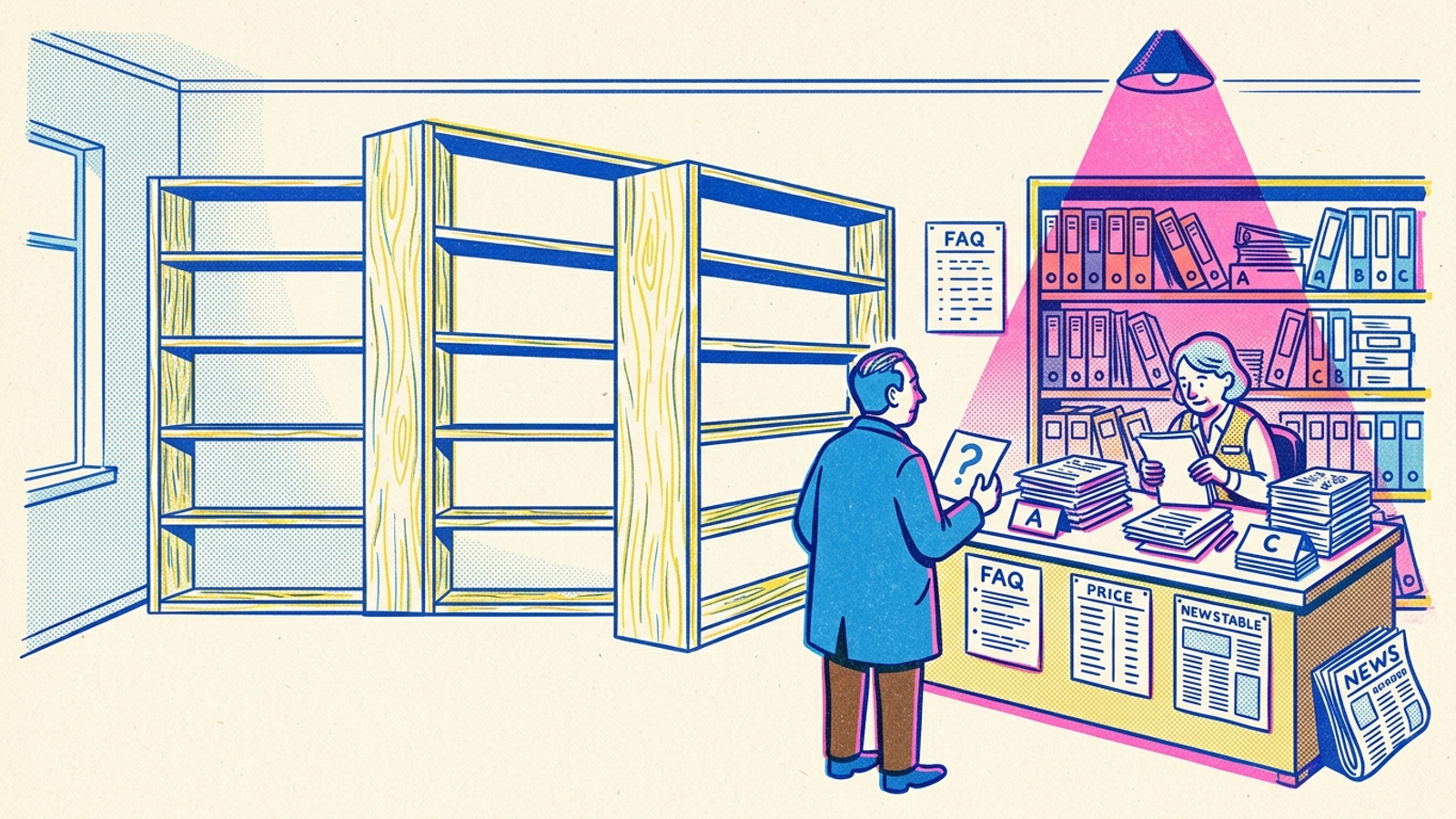
The evidence this camp leans on is uncomfortable for anyone selling another crawl audit. Ahrefs tracked 75,000 brands and found brand web mentions correlated 0.664 with AI Overview visibility, versus 0.218 for referring domains. A Princeton test of generative-engine tactics found that statistics plus cited sources lifted visibility 30 to 40%. The same roundup reported tables extracted at 81% versus 23% for the same content in prose, FAQ sections cited at 2.3 times the rate, and 44.2% of citations drawn from the first 30% of page text. I used to tell clients to fix the schema first. I was wrong. A crawlable site with no direct answer, no price logic, no comparison, and no dated proof is a library with empty shelves.
Think about the prompts where money moves: best garage door installer for a rental property; how much emergency drain cleaning costs after hours; HubSpot versus Pipedrive for a ten-person sales team. Run those in ChatGPT and Perplexity. You may find competitors named with a price, a tradeoff, and a link while your site sits out. One comparison found only about 11% domain overlap between the two engines, so a mention in one does not settle your visibility in the other. Ahrefs reran 863,000 keywords in March 2026 and found the top-10 share of AI Overview citations had fallen from 76% in July 2025 to 38%, with 31.2% coming from positions 11 to 100 and 31% from beyond position 100. Classic rank is not the whole contest. A page that names the buyer’s question in an H2, answers it near the top, then supports the answer with a table, a dated statistic, and a primary-source link gives the engine something to lift. General service prose does not.
Who should close the content gaps first
An established local or B2B site with years of index history, pages that render as plain HTML, and no bot-blocking drama. I keep seeing the same pattern in those accounts: fetchable, indexed, ignored. Another audit does not fill that gap. A page for each money question, written in passages an engine can extract and backed by corroboration elsewhere, has a better job to do. If your page is in the pool but never gets picked, stop shopping for scanners and start answering buyer questions.
Where each pitch stops being useful
The technical camp oversells markup. I keep seeing audits that treat missing schema as the reason for zero citations, and the test data does not back that leap. An Ahrefs diff-in-diff on 1,885 pages that added JSON-LD against 4,000 controls found a 4.6% drop on AI Overviews, a 2.4% lift in AI Mode, and a 2.2% lift in ChatGPT, with only the negative result significant. Google says no special schema or AI file is required for its answers. Clean HTML with real headings and tables helps an engine find and lift a passage. Schema alone does not earn the citation.
The content camp oversells volume. Ten new answer pages change nothing if an edge preset drops the crawler, if the pages are not indexed, or if nobody else on the web corroborates their claims. Pew tracked 900 users and found 88% of summaries cited three or more sources, with Wikipedia, YouTube, and Reddit accounting for 15%; clicks fell to 8% with a summary versus 15% without. One funnel study adds an awkward detail: ChatGPT discarded retrieved Reddit pages about 99% of the time, yet Reddit still topped absolute citations on sheer volume. More pages without extractable facts and third-party proof are just more passages the model can ignore.
My ruling: clear the gate, then pay for the score
I rule for the content camp for most readers, with one hard condition. Think Quality Score, back when I still built accounts by hand. Landing page experience was the gate: a broken or irrelevant page could sink the work around it. Once the page cleared that bar, relevance and expected click behavior mattered. That is the useful analogy for AI citations. Fetchability, rendering, and snippet eligibility form the gate. The directness of the answer, the facts an engine can lift, and corroboration elsewhere form the score. It is an analogy, not a claim that AI engines use Google Ads’ formula.
Most small-business sites already clear the gate. An established WordPress or Shopify site that renders as plain HTML, appears in search, and has no aggressive bot filtering is not where I would start with a full technical overhaul. I spent years opening with audits because audits are easy to sell. The useful work often came later, when we stopped scanning and started answering. Check the gate before you spend. If it is open, put the budget into one page per money question and proof elsewhere that you are real.
A 15-minute check before you buy either pitch
Pick three money prompts: questions a buyer would ask while choosing a vendor. Run them in ChatGPT, Perplexity, and an AI Overview, then note whether your brand appears. Do not mistake an absence for a diagnosis yet. Check the gate in order:
- Search
site:yourdomain.complus a service phrase in Google and Bing. Look for the specific money page, not just your homepage. - Test whether a crawler can fetch that page and read its main answer without running scripts. Check bot or WAF logs if you have them.
- View the page source for
nosnippet,max-snippet, or other restrictions on the passage you want cited.
A site: search is a quick clue, not proof that every AI engine can retrieve the page. If the page is missing from the relevant index or blocked at the server, fix that first. If it is indexed and readable but absent from answers to your buyer questions, investigate the content rather than ordering another crawl report.
Signs your problem is technical:
- Money pages are missing from search results you expect them to appear in.
- A bot test, Cloudflare log, or WAF shows a relevant crawler blocked, or your robots file still carries a staging rule.
- The answer appears only after JavaScript runs, or key prices, specifications, and FAQs sit inside images or sliders the fetcher skips.
- An old SEO ticket left
nosnippet,max-snippet:0, ordata-nosnippeton important passages. Snippet eligibility matters for AI Overviews.
Signs your problem is content:
- Your pages are indexed and readable, but competitors appear for your money prompts and you do not.
- Service pages describe the business without answering the question near the top, explaining price logic, making a useful comparison, or supplying dated proof.
- You have little crawlable corroboration elsewhere: no reviews with specifics, directory profiles, or local mentions to support the facts on your site.
That second pattern is the one I see most. Start with a page for each buyer question: a two- to four-sentence answer up top, a concise passage under each H2, an HTML table and FAQ where they help, and corroboration off your site. If you are comparing tools that help earn citations rather than only monitor mentions, ask which part of that work each tool actually does.
Who should ignore my ruling
Ignore it if you launched in the last year, rebuilt on a JavaScript framework, or sit behind Cloudflare presets a developer set to block everything. If Perplexity drives your calls and its crawler cannot reach your pages, the gate goes first. No debate.
If you use groas, its engine checks fetchability, index coverage, and passage structure continuously, then works on missing answers and corroboration, with actions logged and a human strategist owning the outcome. For everyone else, the order is the one I wish someone had given me years ago: gate in the morning, score by Friday. Stop paying for a second audit when the pool already has your page. Start paying for the answer that gets lifted. Most of you do not have a crawl problem. You have an empty-shelf problem.